
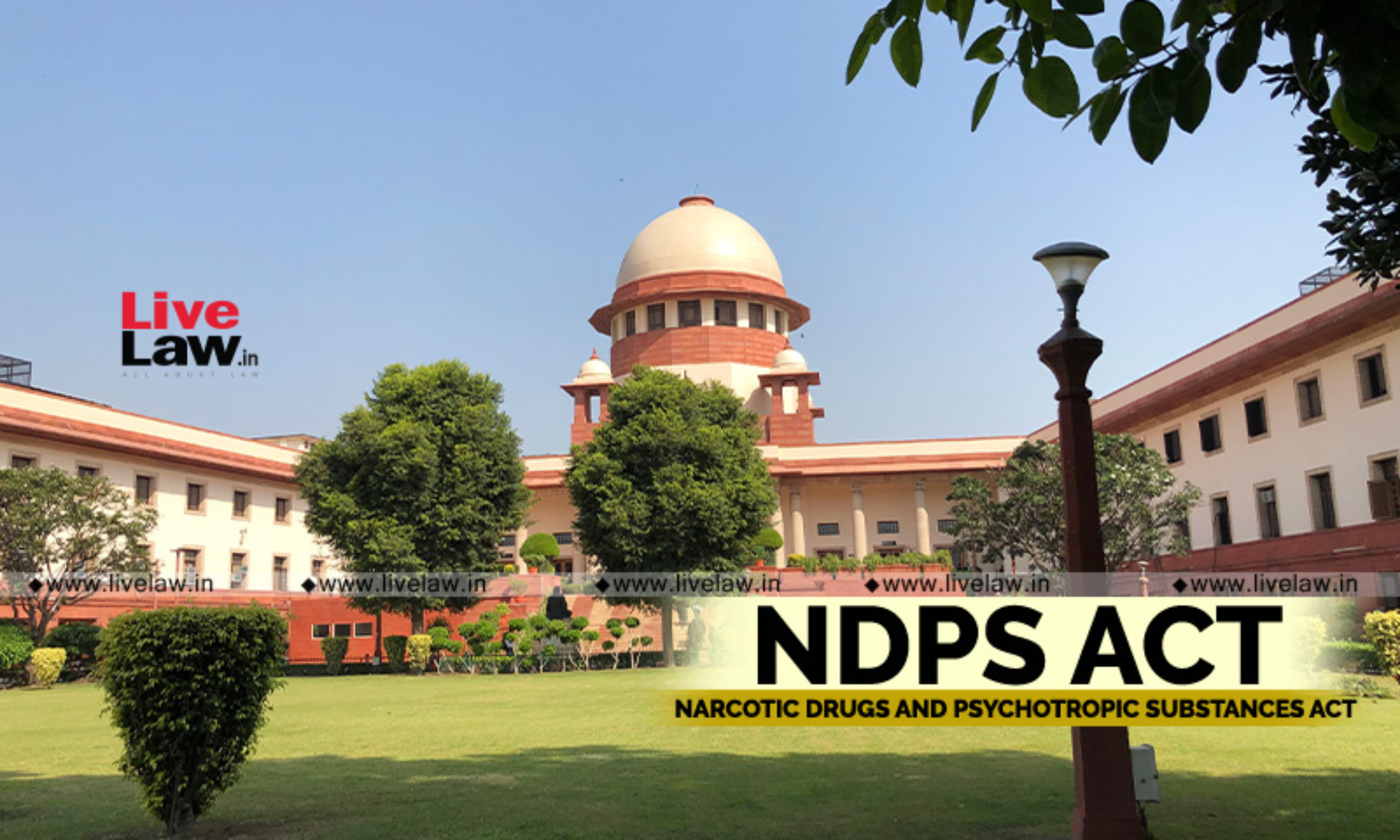
India’s battle against drug abuse and trafficking has been long and complex. At the heart of this legal framework lies the Narcotic Drugs and Psychotropic Substances Act, 1985 (NDPS Act) — a powerful statute designed to regulate, control, and penalize offenses related to narcotics and psychotropic substances.
While the law was enacted with a noble objective — to curb the rising menace of drugs — its implementation often sits at the intersection of strict enforcement and human rights concerns.
⚖️ The Purpose and Power of the NDPS Act
The NDPS Act was introduced to give India a comprehensive legal structure for:
-
Prohibiting the production, possession, sale, transport, and consumption of narcotic drugs and psychotropic substances.
-
Enabling stringent punishment for trafficking and repeat offenses.
-
Regulating the use of these substances for medical and scientific purposes only.
It is a zero-tolerance law, where bail is not a matter of right, and penalties can range from rigorous imprisonment to life sentences and hefty fines depending on the quantity involved and the nature of the offense.
👮 Enforcement: The Long Arm of the Law
The enforcement of the NDPS Act involves multiple agencies:
-
Narcotics Control Bureau (NCB)
-
Customs and Excise Department
-
State Police and Anti-Narcotics Cells
These agencies are empowered to search, seize, arrest, and prosecute under the provisions of the Act. However, the rigid procedural requirements must be strictly adhered to — any deviation could jeopardize the prosecution’s case.
Key provisions include:
-
Section 37 – Bail restrictions for serious NDPS offenses
-
Section 50 – Search of a person must be conducted in presence of a gazetted officer or a magistrate
-
Section 54 – Presumption of guilt from possession, placing the burden of proof on the accused
🧭 Balancing Stringency with Human Rights
While the NDPS Act aims to deter drug crimes, it has also raised serious human rights concerns, especially regarding:
✅ Presumption of Guilt – Reverses the burden of proof, challenging the principle of “innocent until proven guilty.”
✅ Bail Denials – Accused persons, especially first-time offenders or those possessing small quantities, often face prolonged pre-trial detention.
✅ Wrongful Arrests – Due to procedural lapses or overzealous enforcement, individuals may suffer unnecessary incarceration.
✅ Lack of Rehabilitation Focus – The Act’s punitive nature often overlooks addiction as a health issue, rather than solely a legal one.
🏥 Need for Reform and Rehabilitation
In recent years, courts and activists have called for a more humane and reformative approach to NDPS enforcement:
-
Decriminalizing minor consumption cases
-
Focusing on rehabilitation over punishment
-
Protecting procedural rights during arrest and trial
-
Training enforcement agencies on sensitivity and legality
The Supreme Court of India has time and again reiterated the importance of safeguarding procedural rights under the NDPS Act to avoid misuse and miscarriage of justice.
Conclusion
The NDPS Act is a double-edged sword — it is essential for curbing drug trafficking and ensuring public safety, but it must not be wielded in a way that violates constitutional rights and human dignity. A truly effective approach to drug control should balance strict enforcement with compassion, due process, and rehabilitation.
As India continues to refine its approach, the challenge remains: how to fight drugs without compromising justice.
